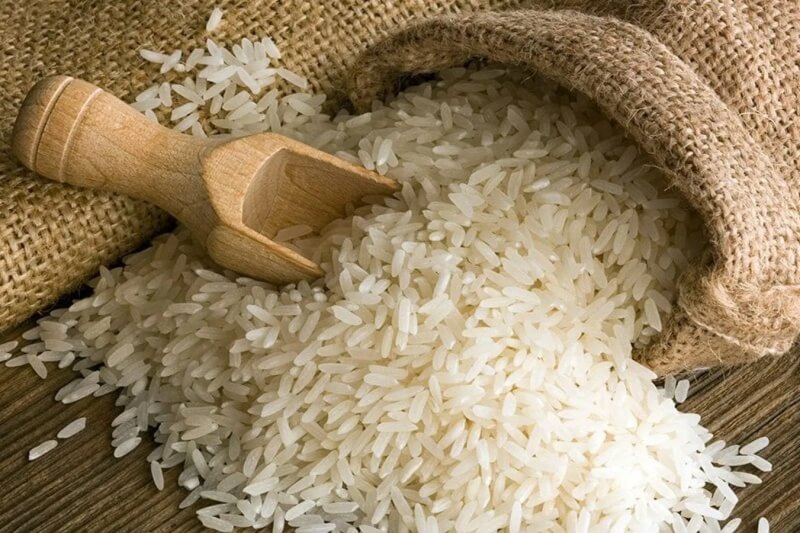
The High Court has instructed the government to remove all locally grown rice from storage and farmers’ holdings within 30 days before allowing duty-free imports into the country.
Justice Edward Muriithi of the Kerugoya High Court made the ruling while approving the phased importation of 254,000 metric tonnes of duty-free rice. The decision aims to protect domestic farmers while meeting the nation’s rice supply needs.
According to the court, the imports will arrive in three equal portions of 85,000 metric tonnes, scheduled for March 1, April 1, and May 1, 2026.
“This decision ensures that local farmers are not disadvantaged while the country addresses its food security needs,” Justice Muriithi said, noting that phasing the imports carefully balances support for farmers with national consumption requirements.
The ruling follows a July 2025 gazette notice authorizing 500,000 metric tonnes of duty-free rice imports. That notice was later suspended by the court over concerns that it would harm local producers. Earlier, the court had capped imports at 250,000 metric tonnes to safeguard domestic rice production.
The Farmers Party initially filed a lawsuit against Treasury CS John Mbadi, the Attorney General, and the Kenya Revenue Authority (KRA), arguing that duty-free imports would hurt farmers in Mwea and Kirinyaga who still had unsold rice. The party later withdrew its case before the court could expand the orders.
MPs Wang’uru Murango and Kamau then joined as petitioners, stating that their constituents could face losses if the rice was released. Justice Muriithi allowed their case to proceed and directed KRA to detain the rice and halt additional imports.
Murango later accused the government of trying to influence the process by amending the gazette notice on December 25, but KRA said the previous notice had expired.
A few days afterward, Victor Okoth Onunga filed a new petition at the Constitutional Court in Nairobi. Represented by lawyer Omar Faruk, Okoth sued Mbadi, Agriculture CS Mutahi Kagwe, the Ministry of Public Service, the Attorney General, and KRA. He said that duty-free imports were intended to help Kenyans in drought-affected and food-scarce regions, particularly in arid and semi-arid areas.
“The report warns that without decisive executive action in the next few weeks, the situation risks escalation into emergency-level humanitarian conditions in multiple ASAL counties,” Okoth said.
He further accused the government and KRA of failing to clear the rice within the required timeline, claiming that the delays had caused price fluctuations, uncertainty during peak demand, and hardship for consumers.































Comments
Sign in with Google to comment, reply, and like comments.
Continue with Google